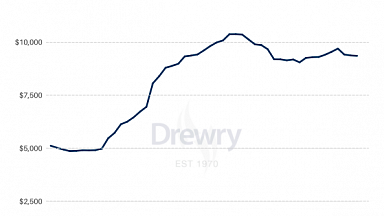
Not since the closure of the Suez Canal in 1967 have we witnessed such sustained disruption to the arteries of global commerce. Ships that once transited the Red Sea in days now sail for weeks around the Cape of Good Hope. Freight rates that were relatively stable for years now swing wildly from month to month. Supply chains we thought were resilient have proven fragile.
The Suez Canal operates below normal capacity, at around 70 per cent below average tonnage transit levels in 2023. This year’s developments around the Strait of Hormuz — a passage for about 34 per cent of global seaborne exports of oil — have drawn renewed attention to the need for sustained dialogue on maritime security. Disruption to port operations has also become chronic, not episodic.
These factors are already reshaping maritime trade patterns. While flows continued to expand by 2.2 per cent in 2024 over 2023, they have done so at a moderate pace — below the average recorded over the 20 years from 2003 to 2023. More telling still: maritime trade now travels significantly longer distances, with the average voyage haul having increased from 4,831 miles in 2018, to 5,245 miles in 2024, as security concerns redraw the map of global shipping. Seaborne trade in ton-miles increased by 5.9 per cent in 2024 on 2023, close to three times the increase in the volume of maritime trade. Distance is no longer geography; it is geoeconomics.
Yet alongside these immediate pressures, deeper shifts are reshaping the sector. The Netzero Framework of the International Maritime Organization could reshape even further how ships are built, fuelled and operated. The orderbooks already tell this story: alternative fuel vessels now represent more than half of the ship tonnage of new orders, though over 90 per cent of the active fleet by tonnage still runs on conventional fuels.
Meanwhile, automation and digitalization advances at breathtaking pace. Smart ports often process containers in minutes, not hours. Artificial intelligence systems predict congestion before it happens. Autonomous vessels are starting to move from concept to prototype. But each digital advance creates new vulnerabilities — cyberattacks on shipping are also on the rise. We are building tomorrow’s infrastructure on today’s security and regulatory foundations.
Maritime transport has weathered disruptions before — wars, closures, economic crises. But never have so many transitions converged so quickly. The sector will adapt; it always does. The question is whether that adaptation will be managed or chaotic, inclusive or divisive, sustainable or merely survivable. This Review of Maritime Transport provides the evidence base for choosing wisely.