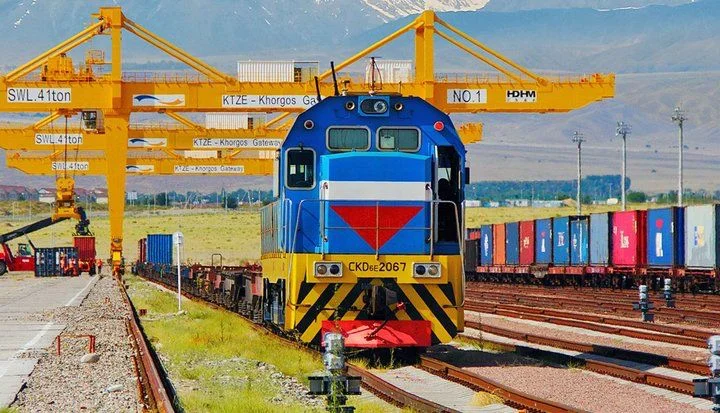
The figure marks a 2% increase compared to 2024, underscoring steady growth in cross-border freight traffic between China and Europe as well as Central Asia.
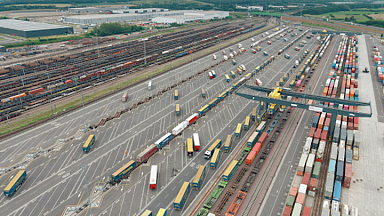
The dry port has become a crucial transshipment center along major overland trade corridors, facilitating the transfer of goods between China’s standard-gauge railway network and Kazakhstan’s broad-gauge system.
This interface has positioned Khorgos as a strategic gateway for containerized cargo moving westward toward European markets and eastward into China.
In 2025, ten new broad-gauge railway lines were constructed at the dry port, expanding capacity and improving operational efficiency. The facility also introduced intelligent infrastructure upgrades designed to accelerate container handling processes.
As a result, average container transfer times have been slashed from five hours to just one hour; a major leap forward in efficiency that strengthens the port’s competitiveness along transcontinental rail routes.
The Khorgos Gateway Dry Port represents the second major joint logistics initiative between China and Kazakhstan, following the development of a logistics base in Lianyungang.
Together, these projects symbolize deepening economic cooperation between the two countries and their shared ambition to enhance connectivity across Eurasia.
The Khorgos complex includes a China—Kazakhstan railway transshipment station, a wheat transshipment facility, and a large container yard, creating a diversified logistics platform capable of handling multiple cargo types. This integrated approach allows the hub to support both bulk agricultural exports and high-value containerized goods.
Beyond freight handling, the dry port’s location within Kazakhstan’s special economic zone has attracted enterprises from manufacturing, logistics, and related industries.
Businesses are leveraging streamlined customs procedures, tax incentives, and proximity to major rail corridors to expand operations.