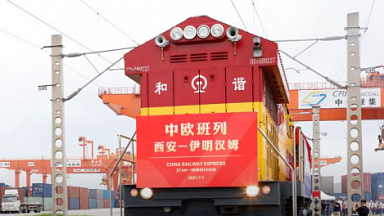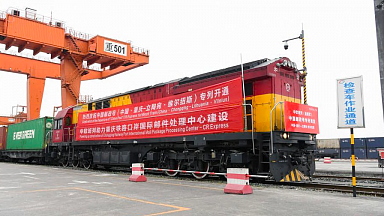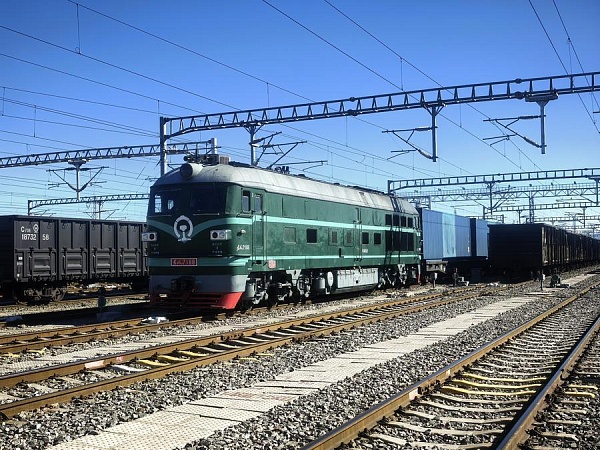
A China-Europe freight train loaded with garments, toys, electromechanical products and auto parts departed earlier this week from Horgos Railway Port in northwest China’s Xinjiang Uygur Autonomous Region for Malaszewicze, Poland, marking the 9,000th such train to pass through the port this year.
The total cargo throughput for the year has surpassed 12 million tonnes. These trains are increasingly serving as a vital transportation link for goods manufactured in China’s industrial heartlands, including the Yangtze River Delta and Pearl River Delta regions, destined for markets in Central Asia and Europe, the customs added.
The China-Europe (Central Asia) rail service offers distinct advantages, including faster transit than sea freight, lower costs than air transport and stable scheduling, earning strong recognition from clients, said Li Qing, business manager of Xinjiang Anrun International Freight Forwarding Co., Ltd.
Port operations have seen a significant efficiency boost, driven by smart port modernization and streamlined customs protocols. Import cargo clearance has been slashed from two to three days to under 16 hours, while export processing has been reduced from six hours to just one hour.
Horgos Port now serves as a key transit point for 90 China-Europe (Central Asia) rail routes, connecting 46 cities and regions across 18 countries.