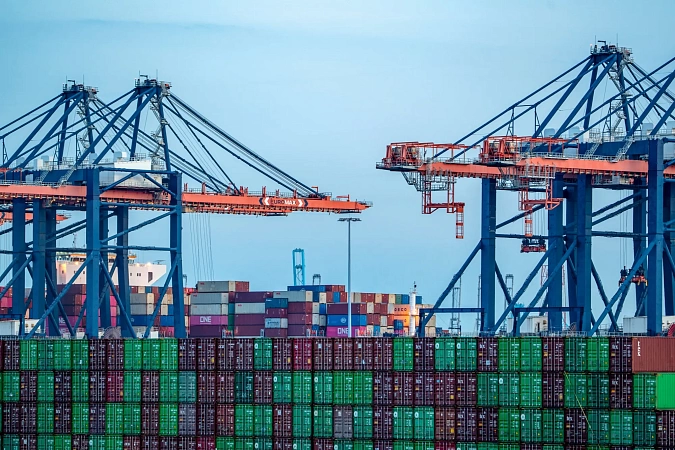
Europe’s biggest port warned that it’s increasingly exposed to geopolitical risks related to trade with China.
In light of recent controversy about Chinese control of container terminals in the region «the real economic vulnerability is not who leases those terminals, but what’s inside those containers,» said Boudewijn Siemons, the chief executive officer of the Port of Rotterdam Authority. «Around a quarter of all containers arrive from China, and more than another quarter contain components made in China.»
Speaking in an interview on Thursday, Siemons said the port has seen a jump in imports from East Asia over the past year, while also having to send back empty containers.
«That is not a good sign,» he said. The Rotterdam port announced a 1.7% decline in total throughput for 2025 from a year earlier. «Less and less is produced here, but more is imported and consumed,» which is detrimental to Europe’s gross domestic product.
To illustrate growing European dependence on China, Siemons pointed to the Nexperia chip crisis last year when export disruptions hit supply chains across industries.
His comments come at a time of increased scrutiny of the Port of Rotterdam’s exposure to foreign influence. Roughly half of the container terminals at the port — a key European logistics hub — are operated by China-linked firms.
China’s growing influence has triggered concerns among Dutch politicians.
«Critical infrastructure is called critical for a reason and must remain in our own hands,» the new Dutch foreign minister Tom Berendsen said in a radio interview last month, when he was still a member of the European Parliament. «We cannot rule out the possibility that, if China wants to put pressure on us, it will use its ability to shut down cranes in the Port of Rotterdam or cause disruptions at our terminals.»
Siemons didn’t comment on the concerns, but noted that Rotterdam «is no Piraeus,» referring to the Greek port operated by China’s Cosco. «There they own the land, but here they lease the land. The land here belongs to us. We haven’t sold our crown jewels, and we are not going to do that either.»
Separately, the Rotterdam port has registered a number of «drone flights we did not have an explanation for,» according to Siemons. The port is currently investing in new technology to detect drones as soon as possible as part of its efforts to improve security measures on the site.